plant
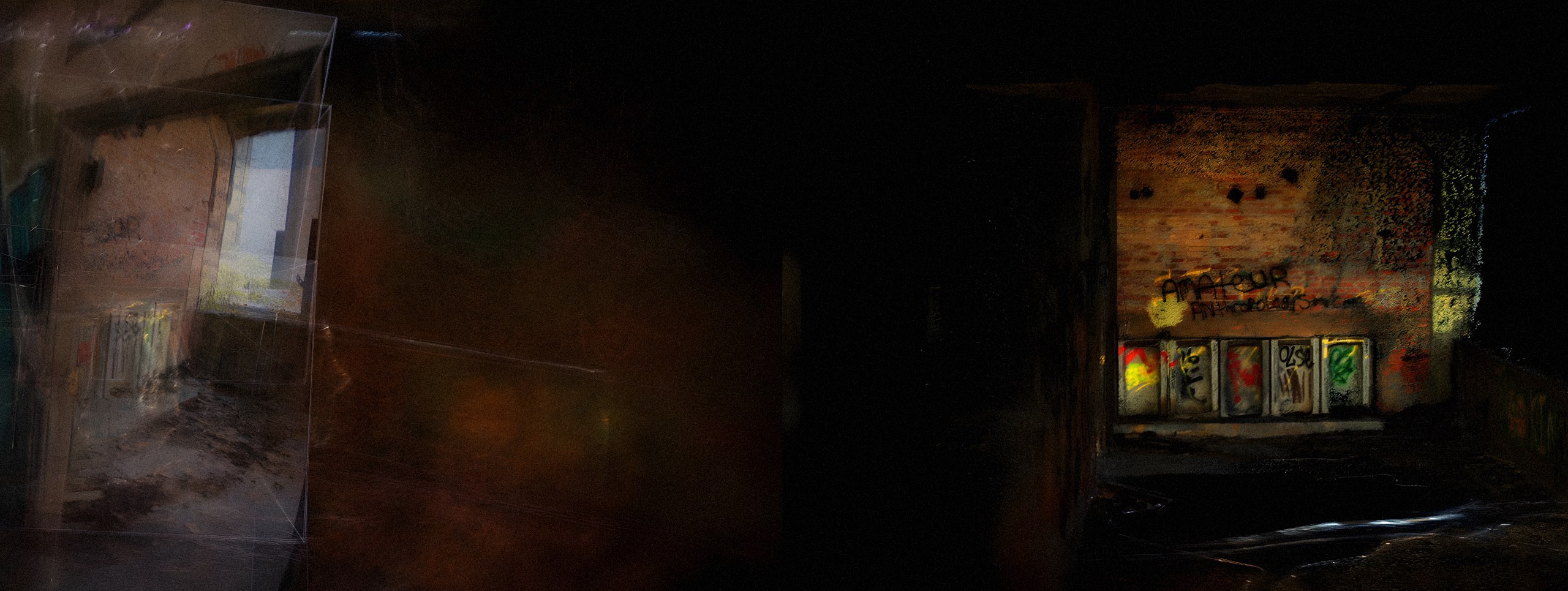
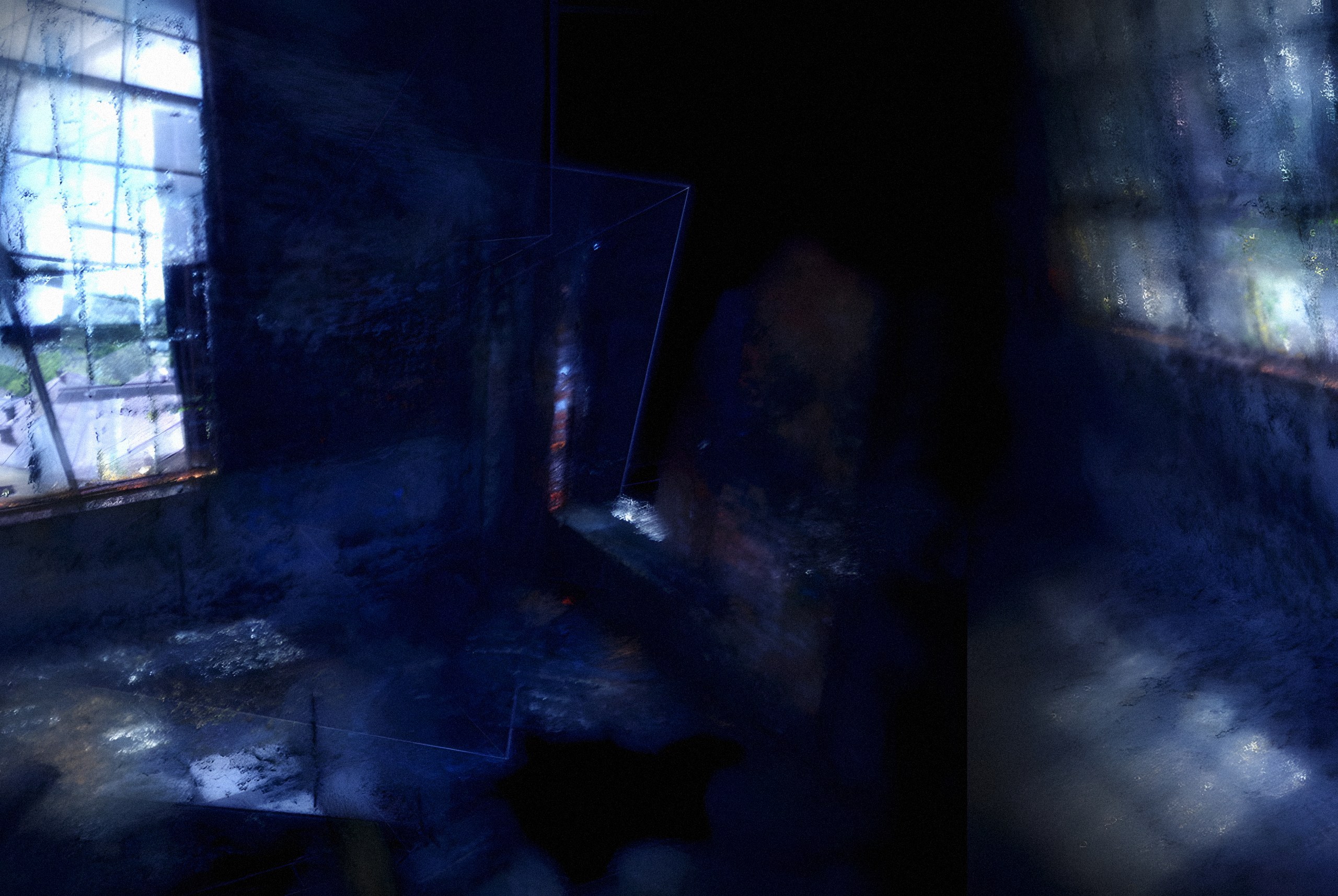
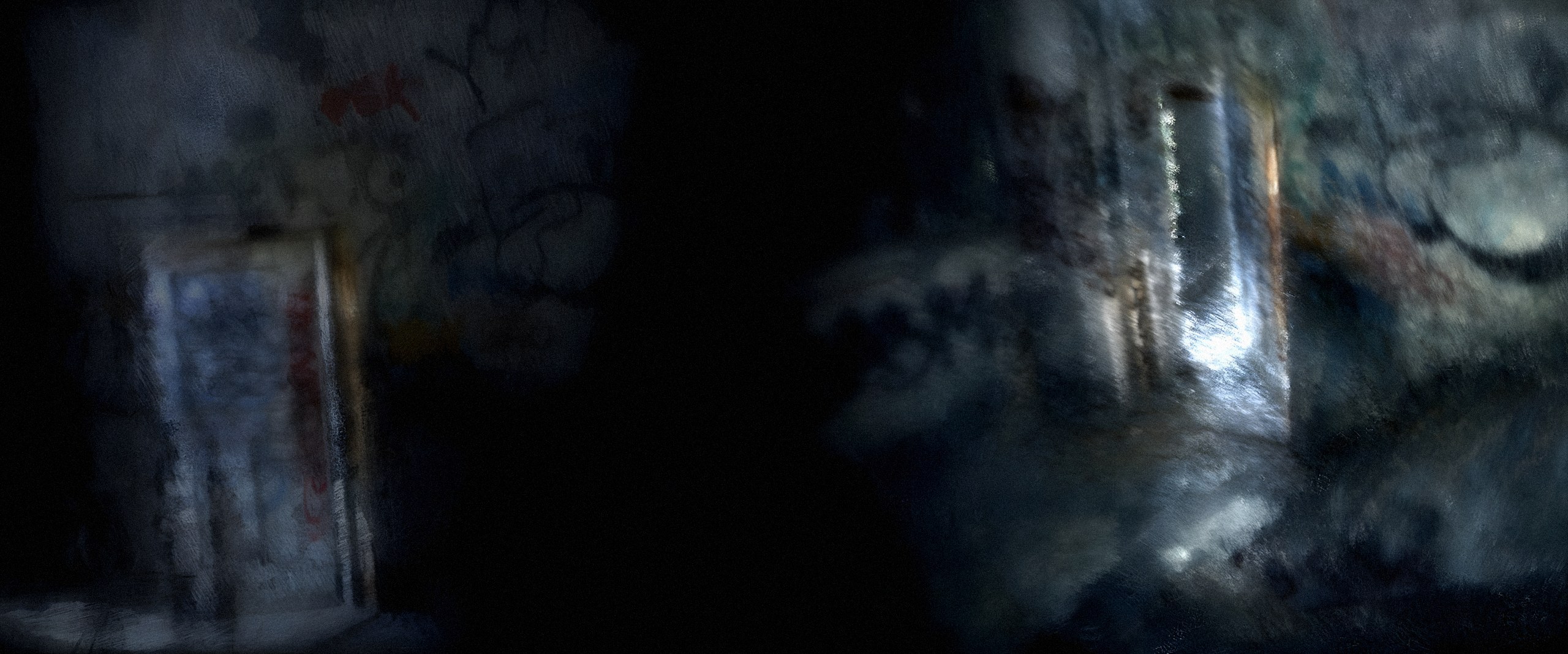
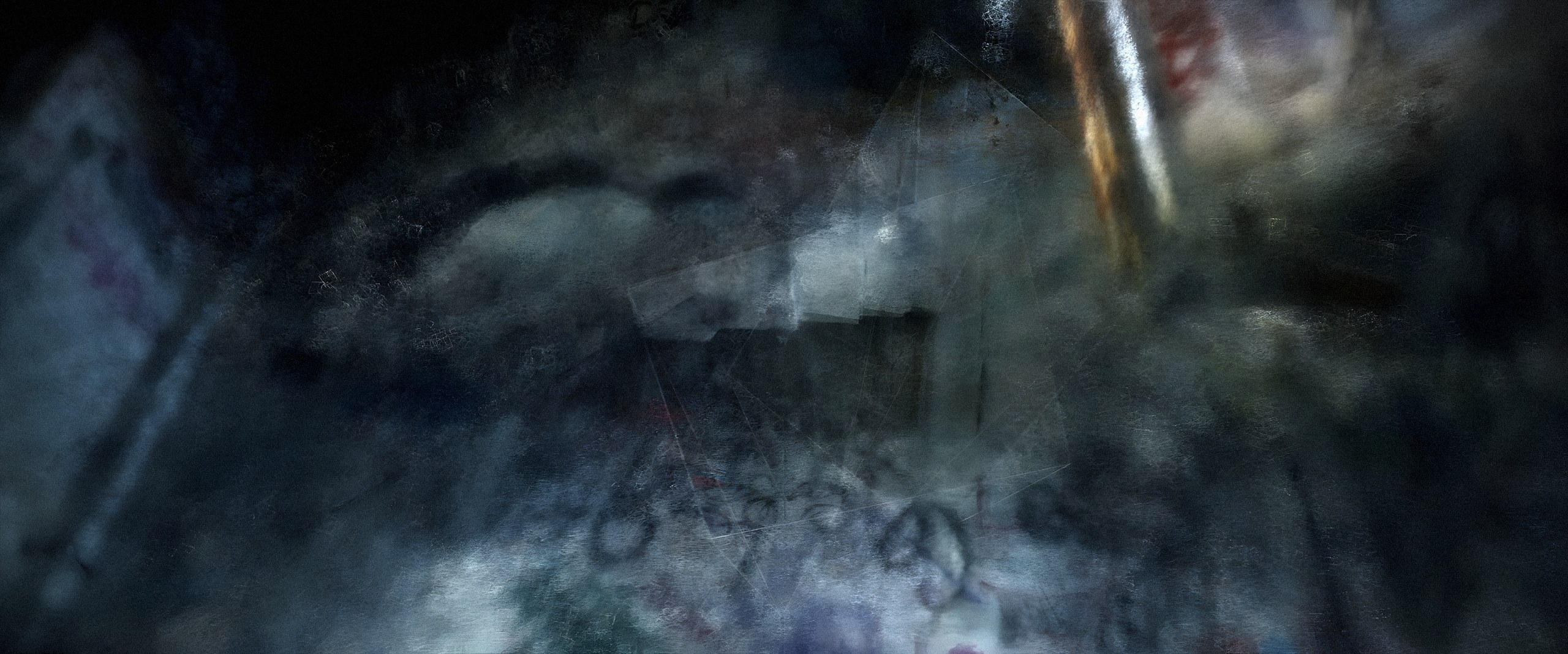
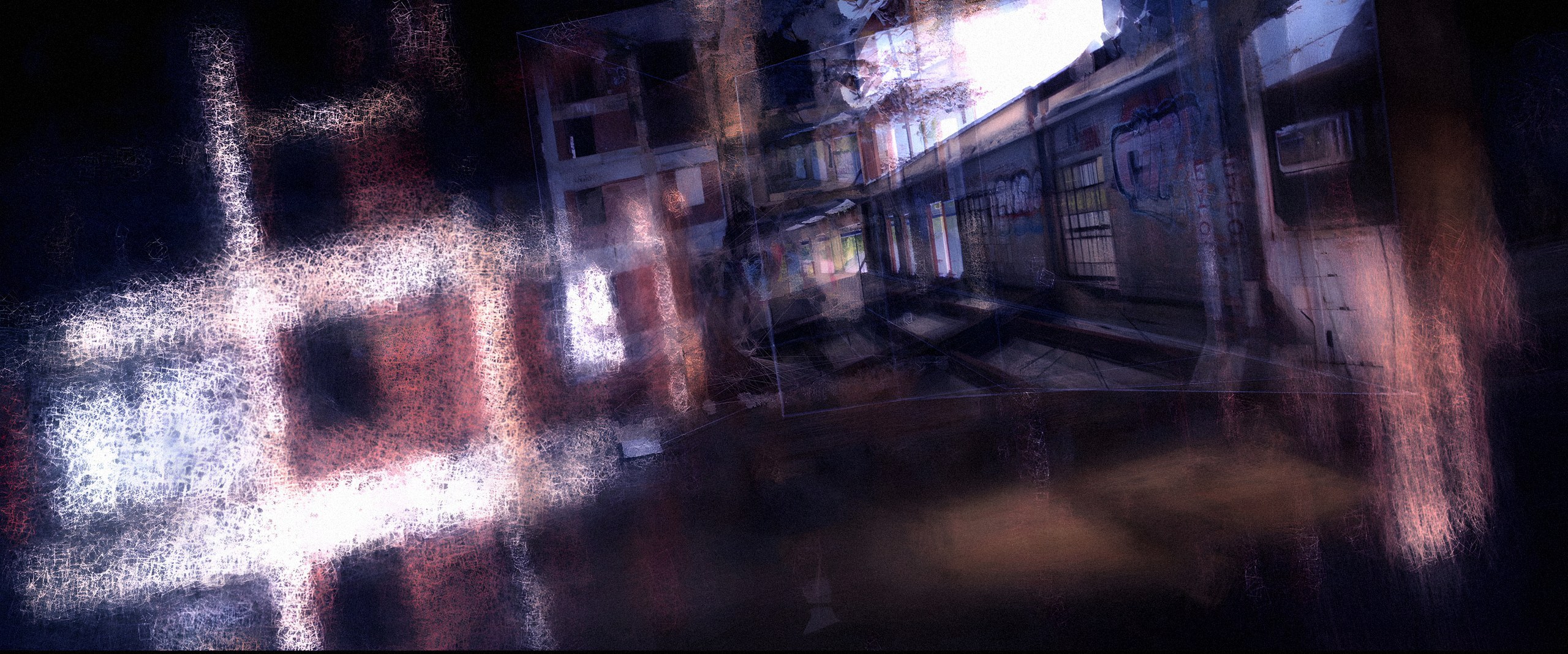
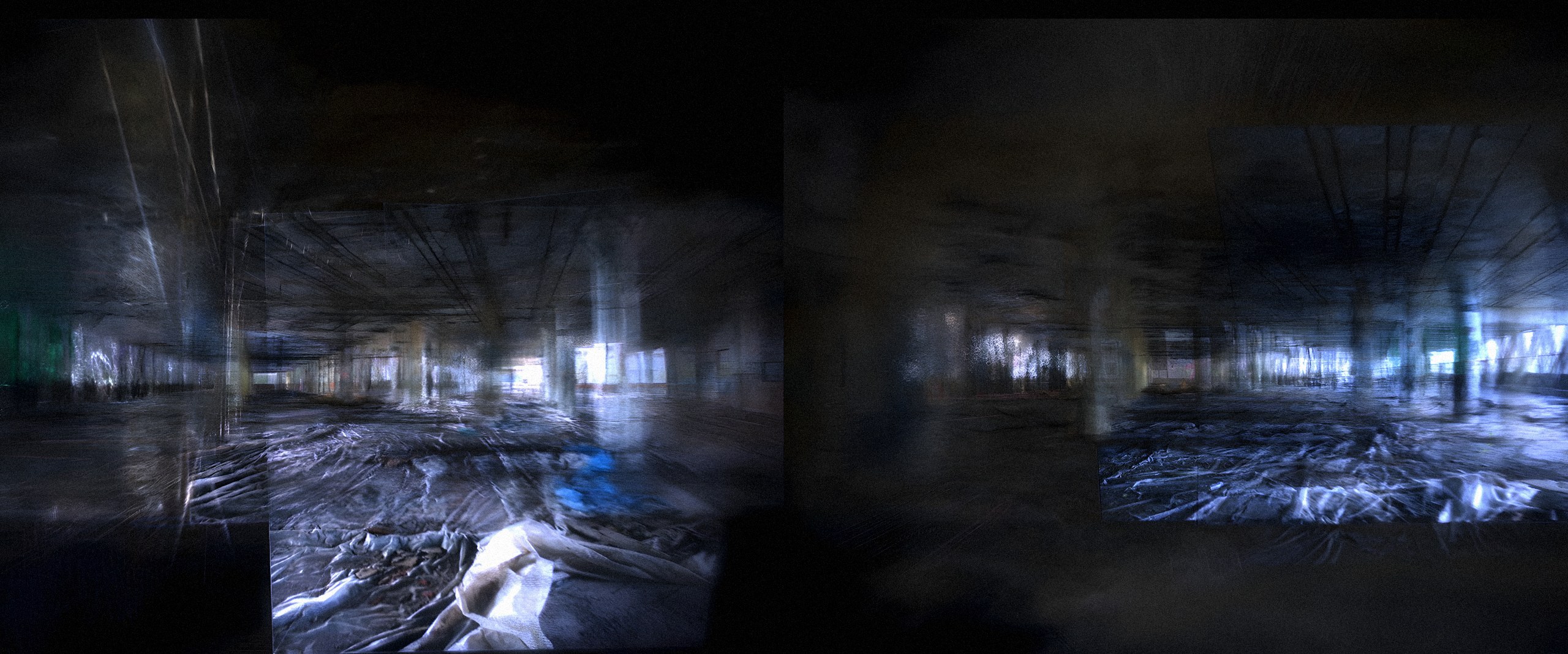
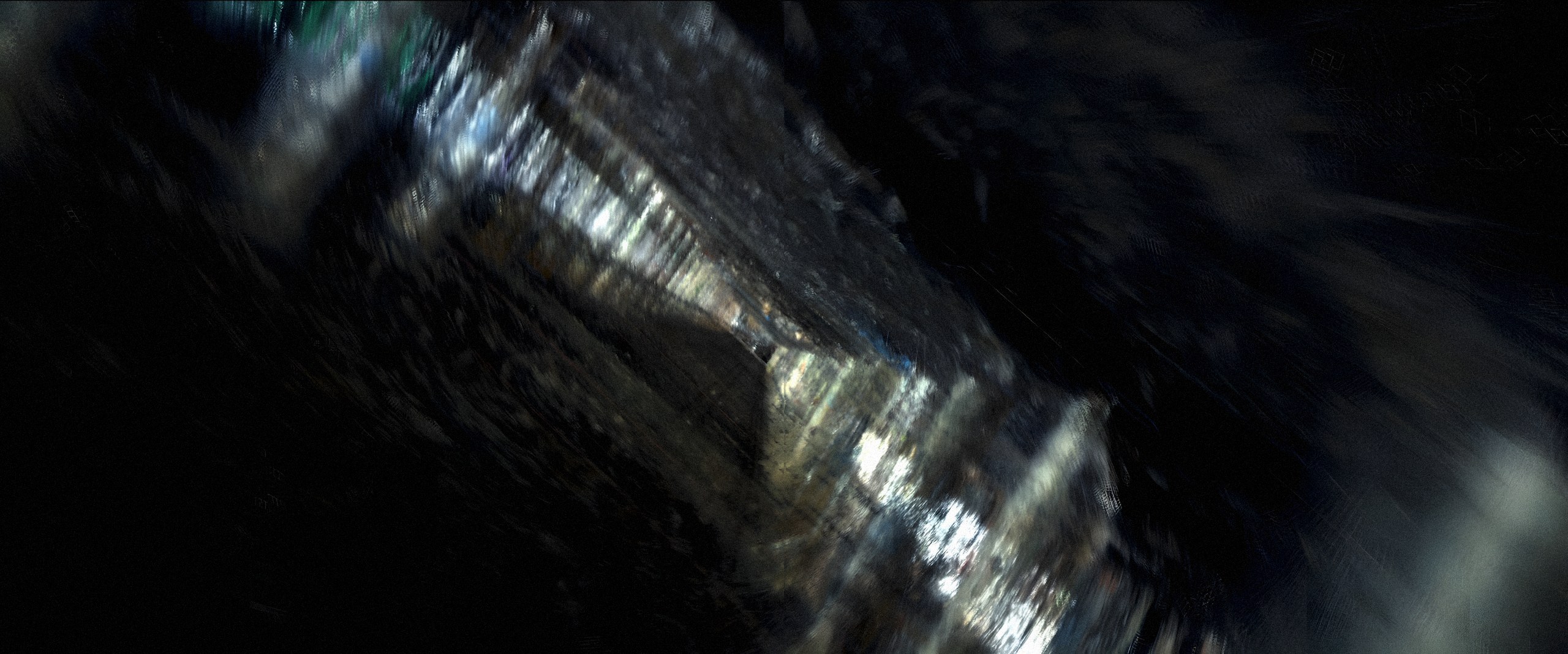
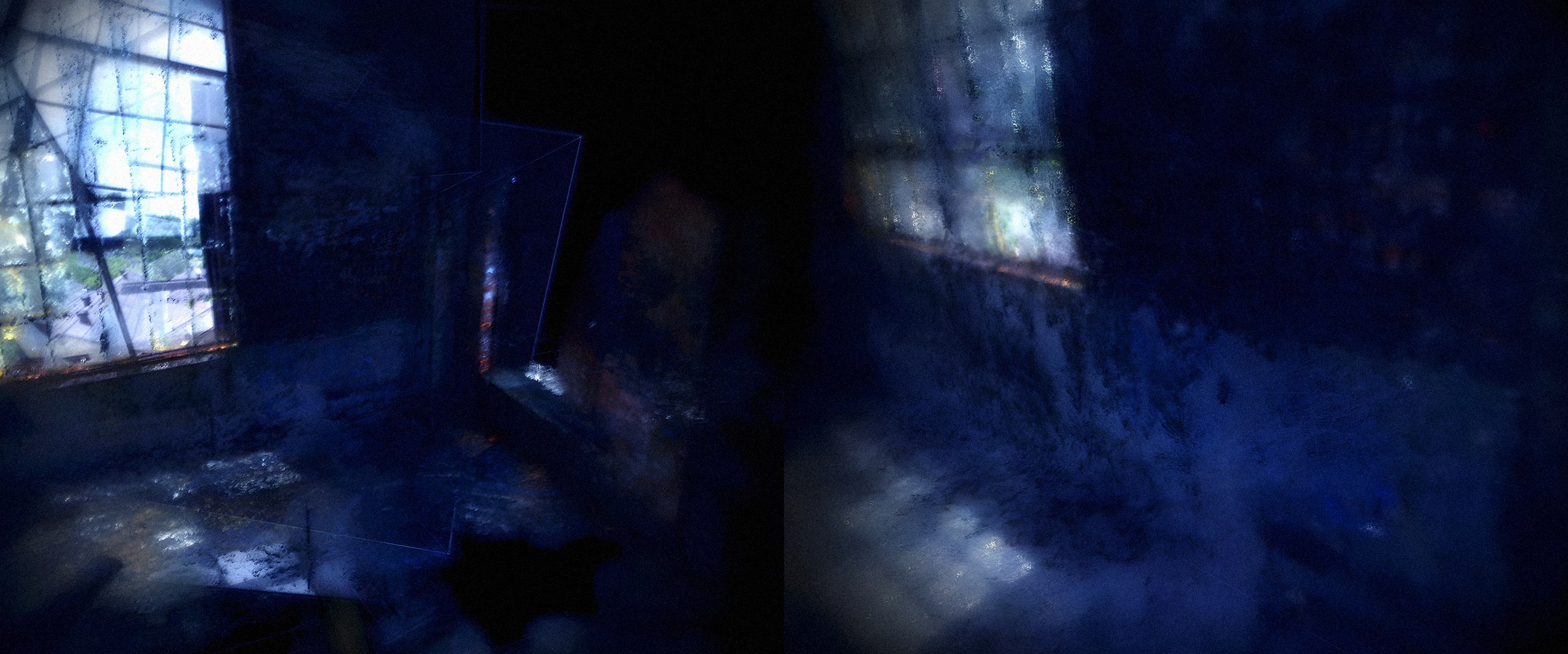
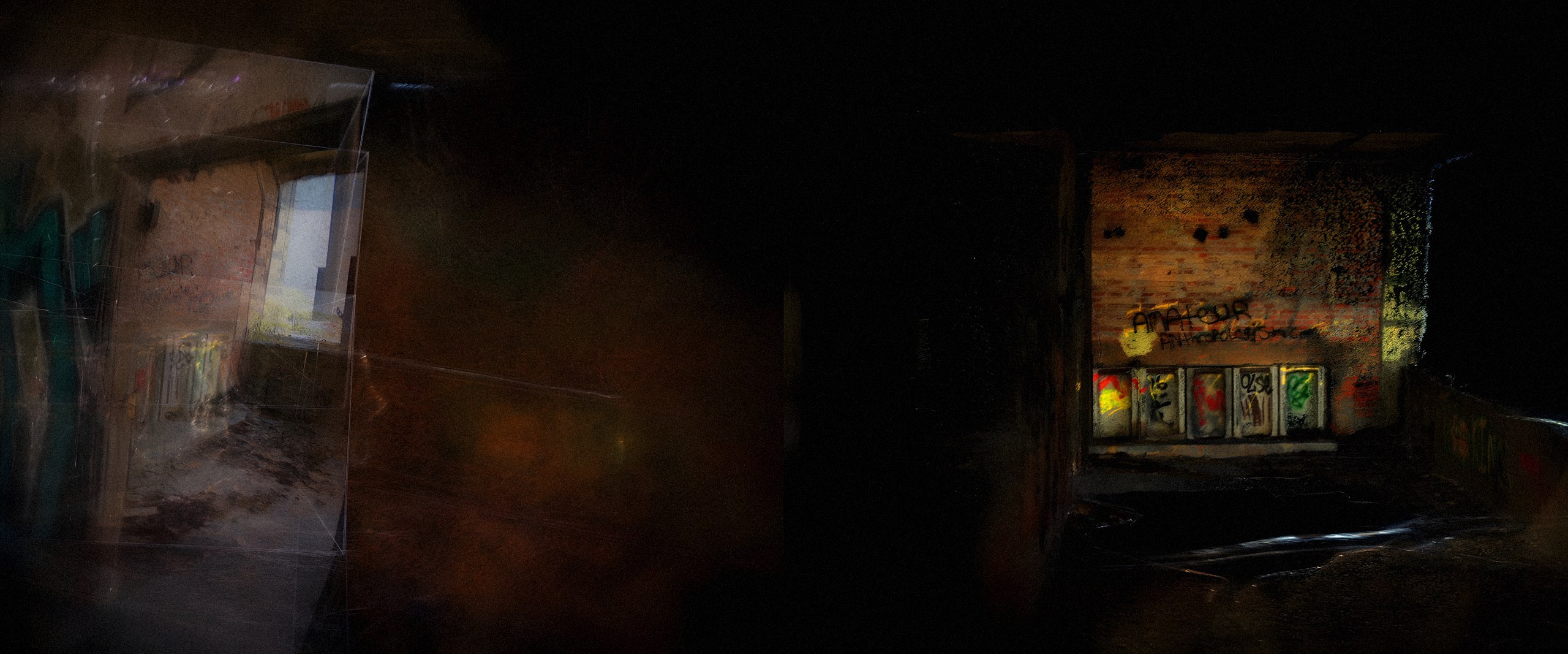
plant exists in two forms — as a two-screen 3D installation and as a cinema-resolution 3D film.
plant is an immersive exploration of the huge factory ruins of the long-abandoned Packard Plant in Detroit. It builds on the spatialization of many thousands of photographs to create a haunting non-photorealistic space of “pointclouds,” in which traces of the original shots sometimes hover. As the artwork moves through the fractured space of the ruins, the viewers encounter remnants of the past (factory floors, discarded cabinets, empty elevator shafts) as well as the surprising evidence of ongoing activity there (graffiti sprayed on the walls, the sound of birdsong, distant voices, and even shotgun blasts echoing through the emptied spaces).
The work serves as a virtual memorial to a grand urban site that is slowly collapsing and now threatened with complete demolition. The squalor of the contaminated material ruins is transcended by the beauty of the light and the intricate spaces to be glimpsed there, so that some of the scenes in plant take on the unexpected beauty of stained glass windows or of Cubist paintings, though always in fleeting rather than fixed renderings.
plant was commissioned by the University of Michigan Institute for the Humanities. In its two- screen installation form, it opened at the University and then at the Detroit Institute of the Arts.
As a 3D film, plant premiered at MoMA, which thereafter acquired it for its permanent collection. Created by Downie, Eshkar, and Kaiser.
From the archive — the earlier web page for this work

plant premiered at the Detroit Institute of the Arts on January 20th and continued on extended run through April 29.
The piece is a two-screen installation that explores the Packard Plant in Detroit in a painterly 3D rendering that paradoxically derives from 18,000 photographs.
plant is an immersive 3D exploration of the huge factory ruins of the long-abandoned Packard Plant in Detroit. It builds on the spatialization of many thousands of photographs to create a haunting non-photorealistic space of “point-clouds,” into which traces of the original shots sometimes hover. As the artwork moves through the fractured space of the ruins, the viewers encounter remnants of the past (factory floors, discarded cabinets, empty elevator shafts) as well as the surprising evidence of ongoing activity there (graffiti sprayed on the walls, the sound of birdsong, distant voices, and even shotgun blasts echoing through the emptied spaces).
plant is a virtual memorial to a grand urban site that is slowly collapsing and now threatened with complete demolition. The squalor of the contaminated material ruins is transcended by the beauty of the light and the intricate spaces to be glimpsed there, so that some of the scenes in plant take on the unexpected beauty of stained glass windows or Cubist paintings, though always in fleeting rather than fixed renderings.
plant was commissioned by the University of Michigan Institute for the Humanities during our residency as the Kidder visiting fellows in the Arts.
In early 2015 this artwork was aquired by MoMA for it permament collection.