Forest
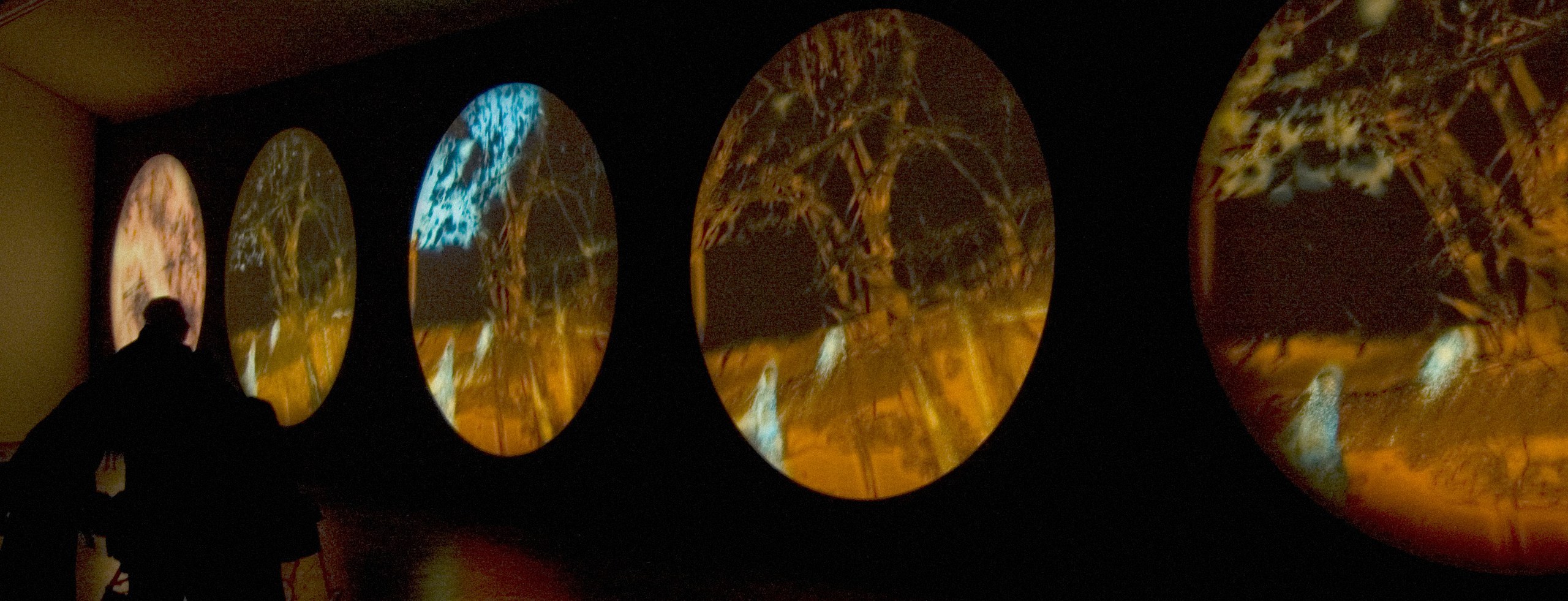
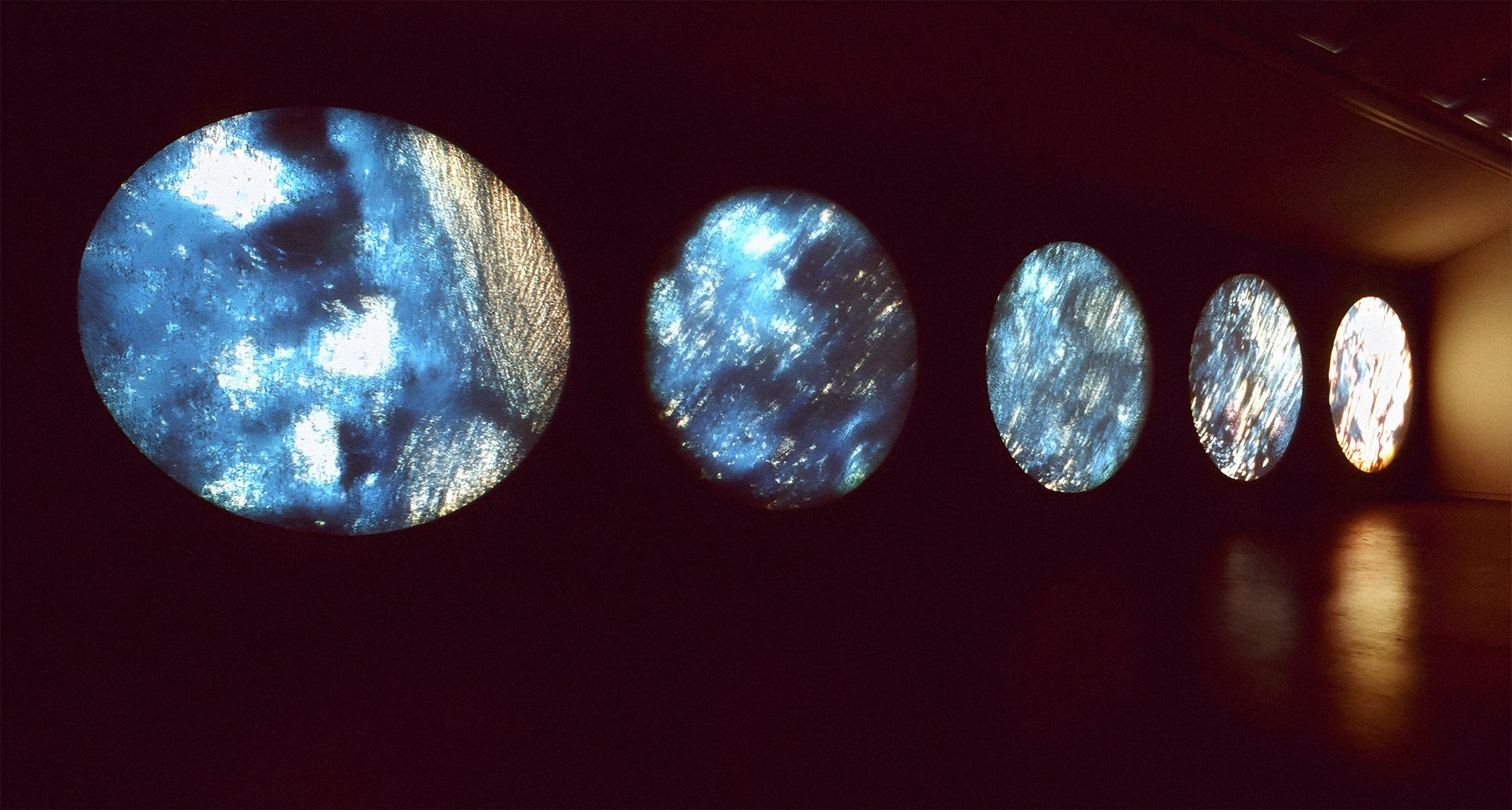
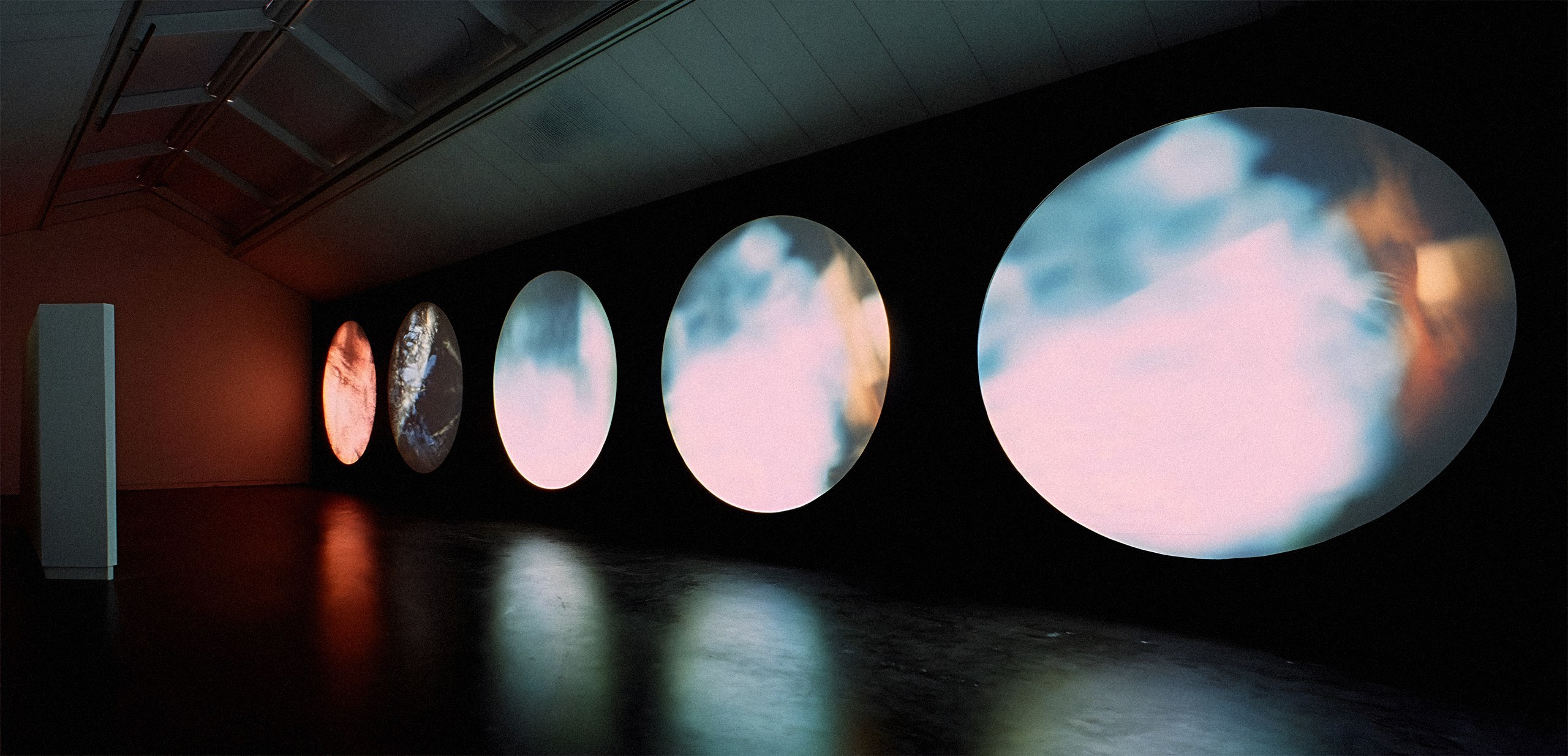
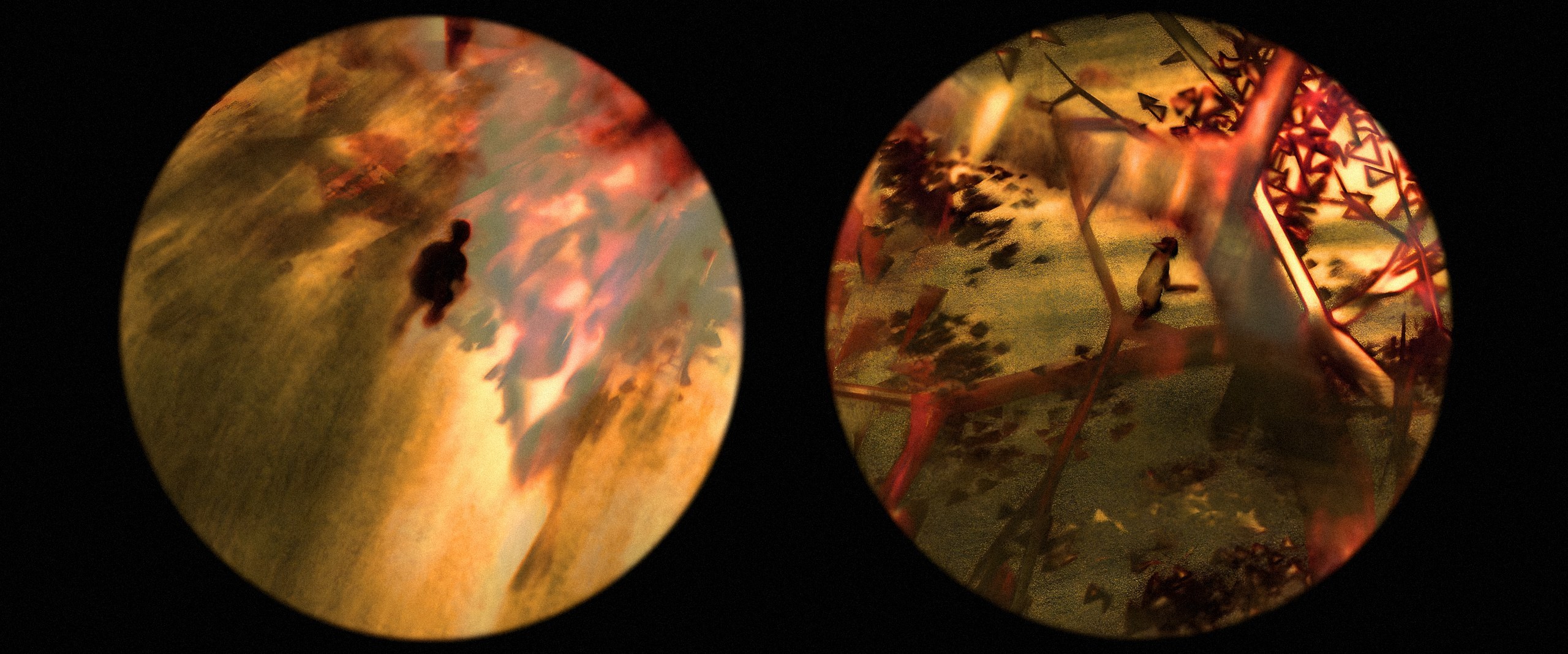
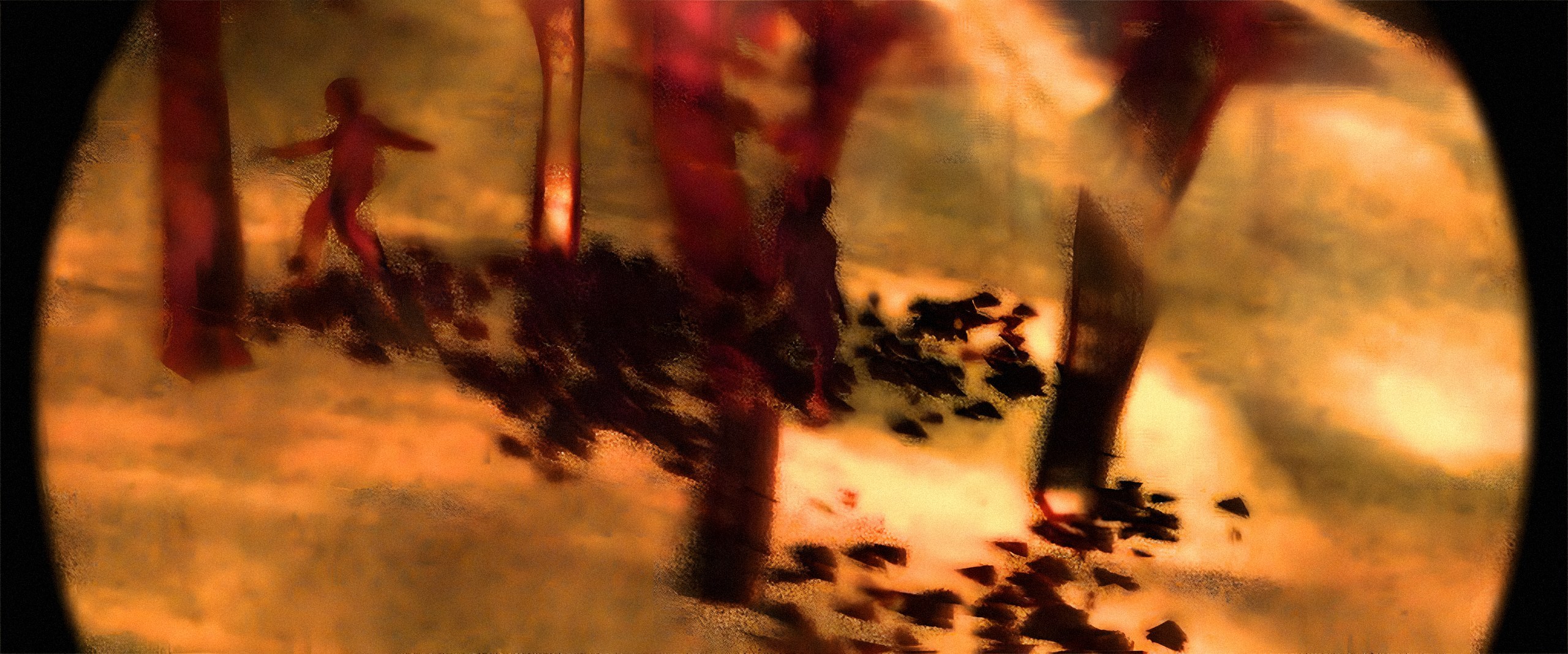
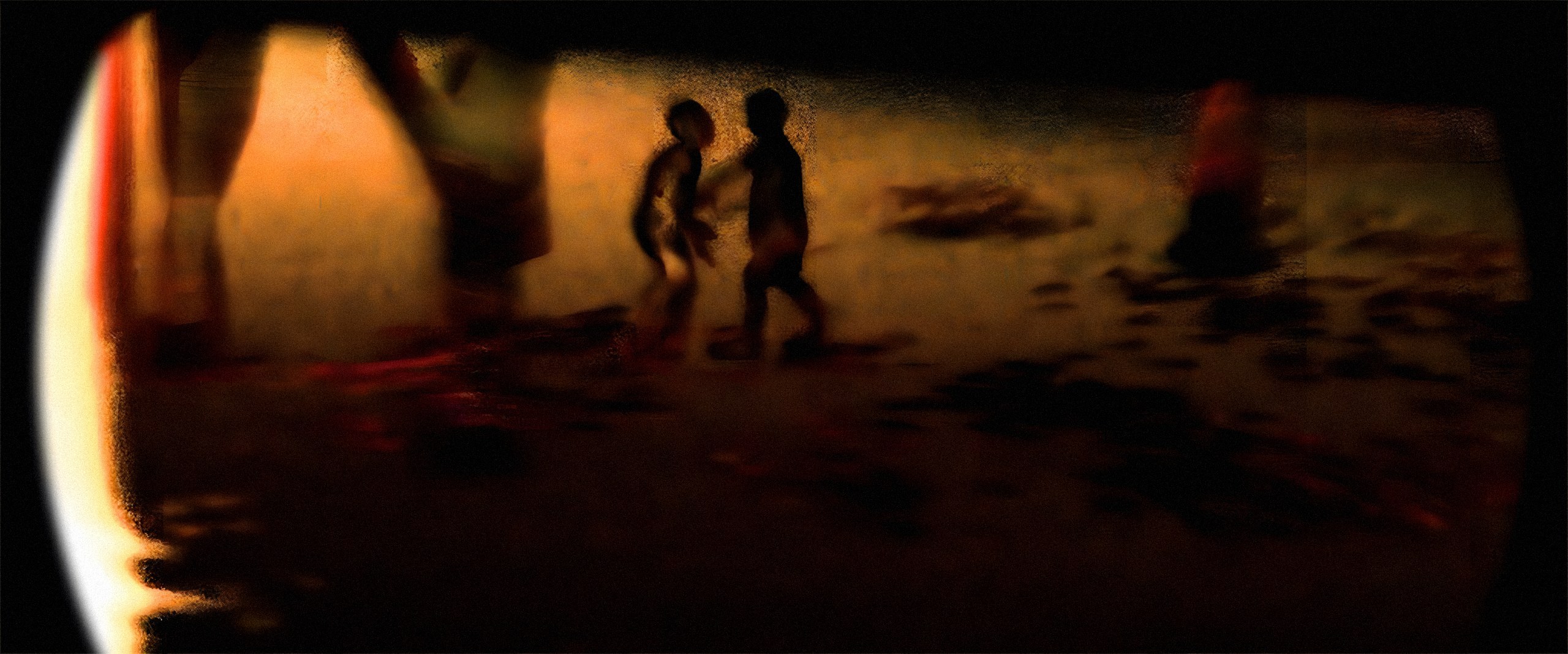
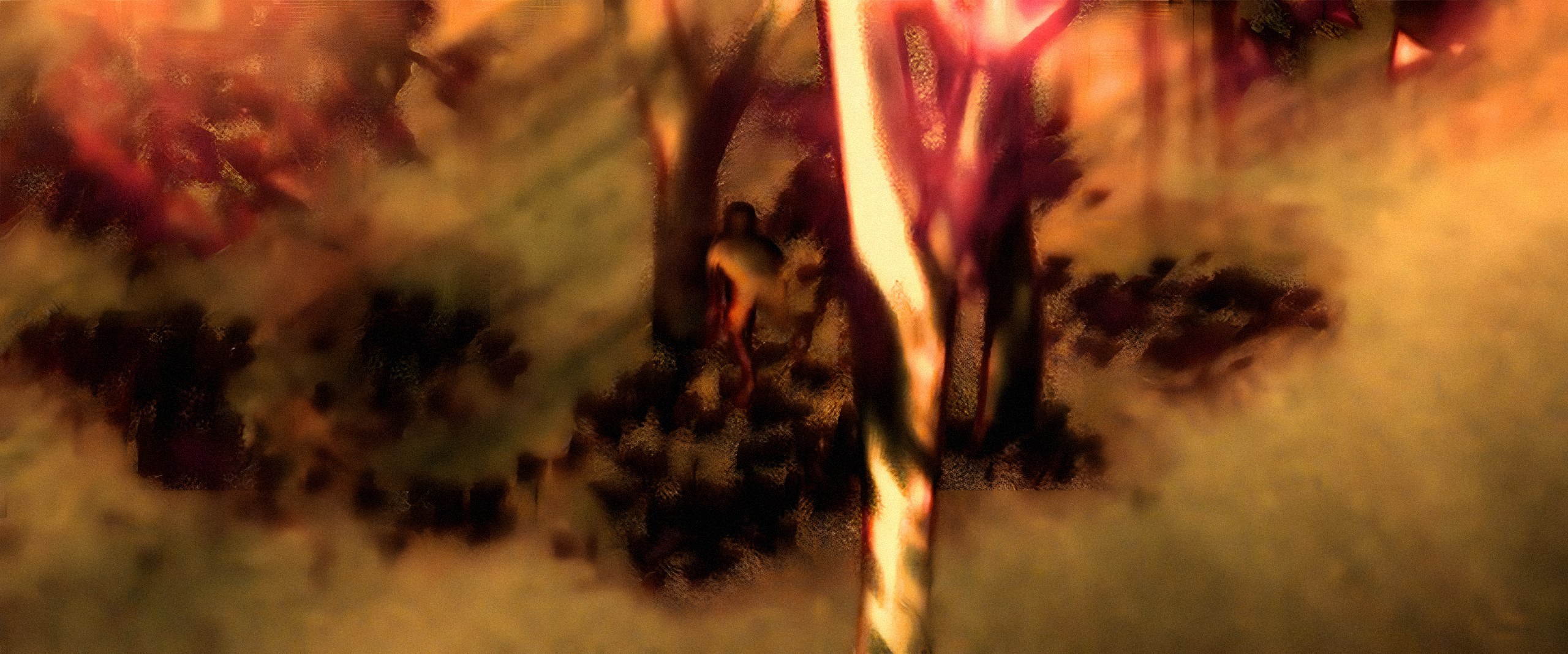
Forest is a visual enactment of outdoor games played in childhood. In this five-screen live installation, virtual children wander through a forested parkland playing hide-and-seek among the tree-trunks. They swing dizzily on monkey bars, then clamber up among the branches overhead, losing themselves in reverie and then re-encountering each other in the forest. The children’s movements are uncannily life-like, for they were drawn from an extensive library of motion-capture data created specifically for Forest.
It’s not just the children playing in this fashion — for the imagery itself plays similar games across the five circular projections. Each of its portholes looks out on the same forest scene, but these views are in dynamic disequilibrium with each other. One porthole may decide to jump to a different camera angle, for example, and the adjacent views will then struggle to catch up with that new angle. Another porthole may choose to switch its colorations, and again the others may try to shift theirs in the same direction.
The artwork generates itself algorithmically in real-time, so that no frame of the continuous animation ever quite repeats. Its custom renderer plays with all the factors that create each view – camera position, movement, angle, and zoom; scene lighting and shadow; the flow of time; and all the elements of its “visual physics” (which allow it, for example, to conjure up an image out of the propagation of its own grain).
A preliminary version was exhibited at SightSonic in York, UK in 2007; the full version premiered at the Centre for Contemporary Arts Glasgow in 2008.
From the archive — the earlier web page for this work

Forest is a live five-screen installation that immerses you in a long-lost world of childhood and in a perceptual system of startling originality.
Forest is a visual enactment of outdoor games played in childhood. In this new five-screen installation, virtual children wander through a forested parkland playing hide-and-seek among the tree-trunks. They swing dizzily on monkey bars, then clamber up among the branches overhead. They lose themselves in revery and in make-believe.
But the imagery plays similar games across the five circular projections. Each of its portholes looks out on the same forest scene, but these views are in dynamic disequilibrium with each other. One porthole may decide to jump to a different camera angle, for example, and the adjacent views will then struggle to catch up. Another may choose to switch its color relations, and again the others may try to shift theirs in the same direction.
The artwork generates itself algorithmically in real-time, so that no frame of the continuous animation ever quite repeats. Its custom renderer plays with all the factors that create each view – camera position, movement, angle, and zoom; scene lighting and shadow; the flow of time; and all the elements of its “visual physics” (which allow it, for example, to conjure up an image out of the propagation of its own grain).
All this gives rise to a strikingly filmic and uncannily live expression of subjective space, the likes of which we have never seen before.
A preliminary version of Forest, in fixed playback, was exhibited as a public artwork in late October 06 in York, England, as part of the SightSonic Festival. There, paired sequences were rear-projected onto adjacent storefront windows on a medieval lane in the older section of town.
Forest was created with support from Dancing in the Streets, the Greenwall Foundation, the New York Foundation for the Arts, Renew Media, and the Rockefeller Foundation.
A self-contained description of Forest and its specifications may be downloaded as a 2mb PDF.